
What Is Disc Desiccation?
Disc Desiccation is a loss of water within a spinal disc that can reduce its height and flexibility. The change often develops as discs age or degenerate. Disc desiccation may appear on magnetic resonance imaging, but the finding does not by itself prove that the disc causes pain.
Quick Facts About Disc Desiccation
Category
Spinal disc change
Used for
Understanding degenerative disc findings
Common confusion
A disc herniation
Also called
Degenerative Disc Desiccation, Disc dehydration
Often discussed with
Degenerative Disc Disease Treatment, Herniated Disc Treatment
Key Takeaways About Disc Desiccation
- It describes water loss inside a spinal disc.
- Imaging findings must match symptoms and examination.
- Disc desiccation isn't the same as a herniated disc.
How Disc Desiccation Works
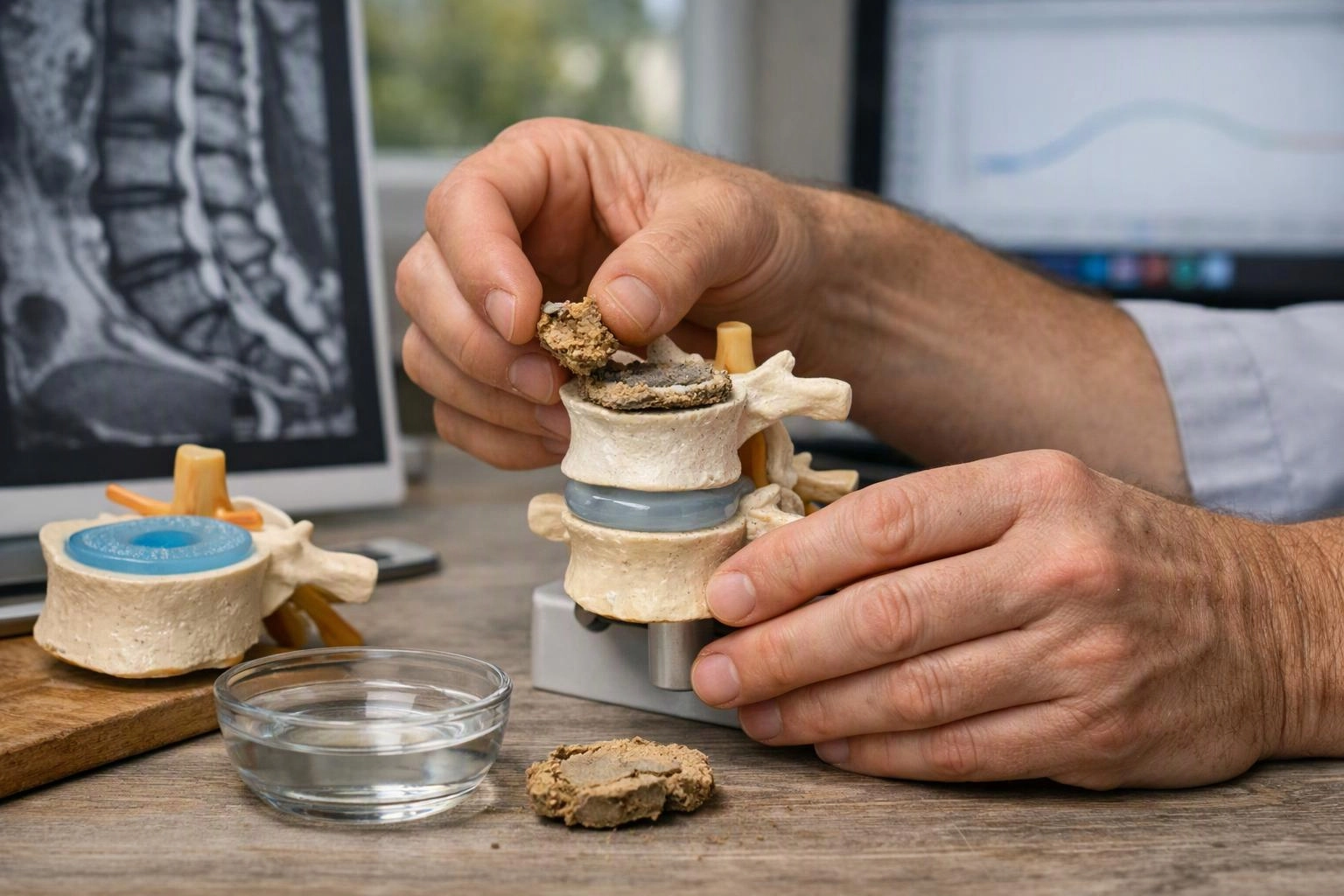
Disc Desiccation develops when a spinal disc loses some of its water content. The disc becomes less flexible and may lose some height. These changes can affect how the disc handles movement and pressure.
Related glossary terms: Magnetic Resonance Imaging, Vertebral Disc, Disc Bulge.
Magnetic resonance imaging can show signs of disc desiccation, such as a darker disc or reduced disc height. Imaging shows structure, not the source of every symptom. A clinician compares the scan with your pain pattern, physical examination, and other findings.
Degenerative disc disease may include disc desiccation along with other changes. A disc can be desiccated without a bulge, tear, or herniation. These terms describe different findings, even though they can appear together.
From the Premier Injury Specialists team
When we review disc desiccation during degenerative disc disease treatment, we connect the imaging finding with the person’s symptoms and examination. Our team also checks whether nearby findings, such as nerve irritation or joint changes, better explain the pain pattern.
Disc Desiccation in Practice: A Real-World Example
An MRI may show disc desiccation in the lower back of a person with low back pain. The care team then compares that finding with movement limits, nerve symptoms, and other scan results before planning treatment.
Related Terms
Magnetic Resonance Imaging
Magnetic Resonance Imaging is a medical imaging method that uses a strong magnetic field and radio…
Vertebral Disc
A vertebral disc is a flexible cushion between the bones of the spine. Each disc has…
Disc Bulge
A Disc Bulge is a spinal disc change in which the disc extends beyond its usual…
Annular Tear
An annular tear is a small split in the tough outer ring of a spinal disc…
Premier Injury Specialists
Have Questions About Disc Desiccation?
Contact Premier Injury Specialists for practical guidance on Disc Desiccation and related pain management physician work in Stockbridge.