Spinal Stenosis Symptoms: When Back or Leg Pain Needs Attention
Spinal stenosis symptoms include back or leg pain, numbness, tingling, weakness, and pain that worsens with standing or walking. Premier Injury Specialists evaluates the cause and explains treatment options, including spinal stenosis treatment and epidural steroid injections when appropriate.
Request an EstimateWhat Are the Common Symptoms of Spinal Stenosis?
Spinal stenosis commonly causes back or leg pain, numbness, tingling, weakness, and reduced walking tolerance.
Symptoms can vary based on the affected area. Lumbar spinal stenosis may affect the legs, while cervical spinal stenosis may affect the arms, hands, balance, or walking.
These symptoms can also come from other conditions. Our team connects the symptom pattern with an examination before recommending treatment.
Why Does Spinal Stenosis Pain Get Worse When You Stand or Walk?
Spinal stenosis pain often worsens during standing or walking because those positions can reduce space around compressed spinal nerves.
The spinal canal can become tighter when the lumbar spine extends during standing. That position may place more pressure on the nerve roots.
Walking can then cause leg pain, tingling, numbness, or weakness. Sitting or using a forward-leaning posture may bring relief because these positions can open space around the nerves.
This pattern is called neurogenic claudication. We ask about pain when walking, pain when standing, relief when sitting, and your walking tolerance during an evaluation.
What Causes Spinal Stenosis?
Spinal stenosis develops when changes narrow the spinal canal or the openings for nerve roots.
The cause may affect the lumbar spine, cervical spine, or another part of the back. Our team looks for the cause because treatment depends on the location and type of narrowing.
Foraminal stenosis affects the openings where nerves leave the spine. We consider the affected structures, including intervertebral discs, ligaments, and vertebrae.
When Should You See a Doctor for Spinal Stenosis Symptoms?
You should seek medical evaluation when spinal stenosis symptoms persist, worsen, limit walking, or include new weakness or bladder and bowel changes.
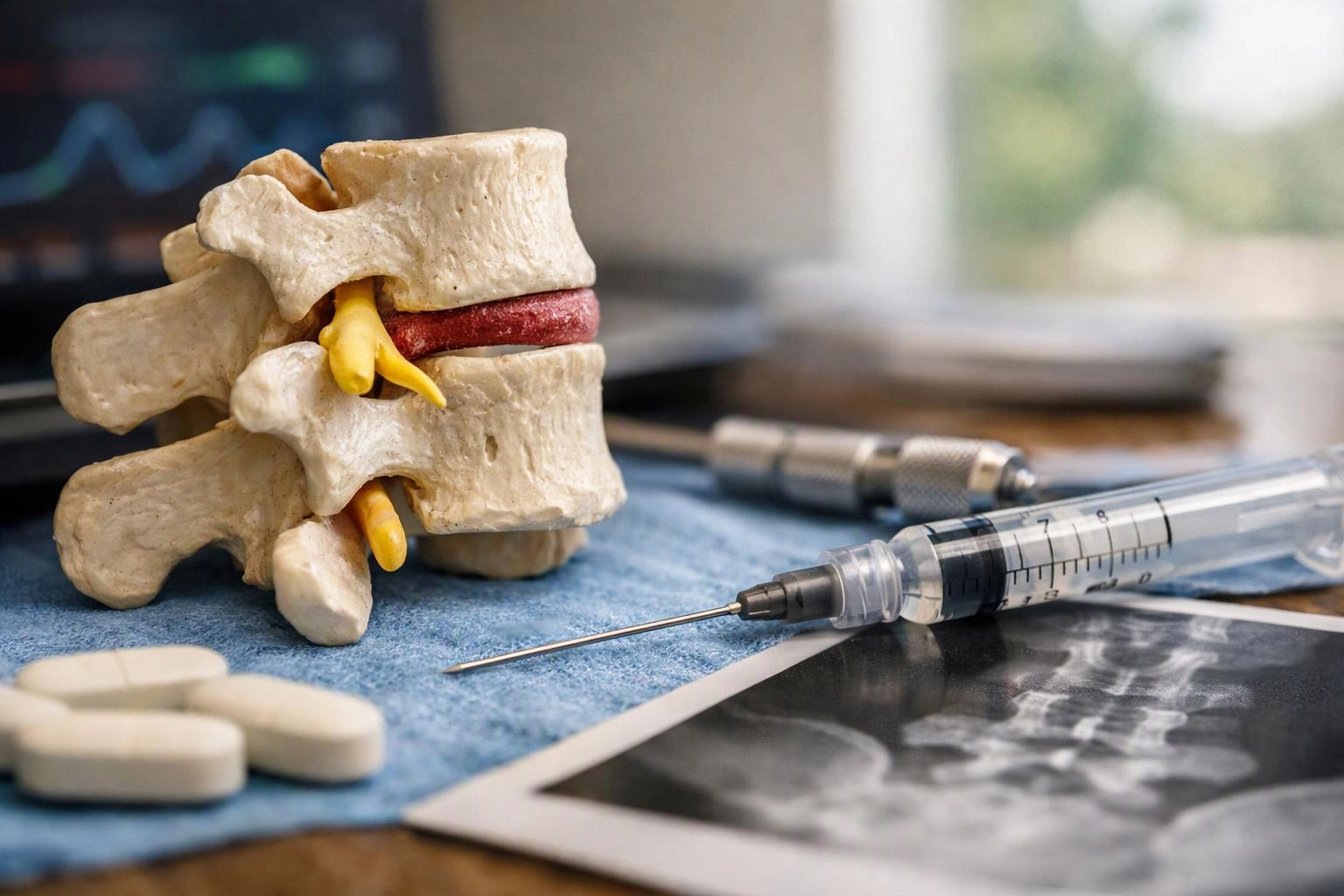
Persistent back pain, progressive numbness, leg weakness, and balance problems need attention. New bladder changes or bowel changes can signal an urgent problem.
Seek urgent medical care for sudden loss of strength, severe balance trouble, or new loss of bladder or bowel control. We review urgent symptoms promptly and help guide the next step.
How Is Spinal Stenosis Diagnosed?
Spinal stenosis diagnosis combines your symptom pattern with a physical examination and imaging when imaging is needed.
We begin with your medical history and ask how symptoms change with sitting, standing, and walking. A neurologic examination checks strength, sensation, reflexes, and balance.
Magnetic resonance imaging can show discs, nerves, ligaments, and spinal canal narrowing. X-ray may show alignment or arthritic changes, while computed tomography can provide detailed views of bone.
Imaging findings must match your symptoms. Our team reviews the images with your examination before discussing conservative treatment or injection treatment.
What Treatments Can Relieve Spinal Stenosis Symptoms?
Spinal stenosis treatment may include activity changes, physical therapy, medication, epidural steroid injections, or referral for surgery based on symptoms and findings.
Physical therapy can support strength, movement, posture, and walking tolerance. Activity changes and pain medicine may also reduce strain during daily tasks.
We may discuss Spinal Stenosis Treatment when nerve irritation affects your daily life. Our plan follows your symptoms, examination, imaging, and treatment goals.
Surgical referral may be appropriate when symptoms progress, weakness develops, or conservative care does not provide enough relief. We explain why each option may fit your situation.
When Might an Epidural Steroid Injection Help?
An epidural steroid injection may help reduce inflammation around an irritated spinal nerve and ease radiating leg pain.
An epidural steroid injection places medication near the affected nerve roots. The goal is to reduce nerve irritation and support movement while the broader treatment plan continues.
We discuss expected goals, alternatives, and injection risks before treatment. Risks can include infection, bleeding, nerve injury, or a temporary increase in symptoms.
What Can Help Prevent Spinal Stenosis Symptoms From Getting Worse?
Healthy daily habits may help protect movement and reduce stress on the spine.
These steps cannot remove existing narrowing, but they may support function. Our team can help match activity choices to your symptoms.
How We Help Evaluate Spinal Stenosis Symptoms
Premier Injury Specialists evaluates your pain history, neurologic symptoms, examination findings, and imaging to build a focused treatment plan.
We ask how symptoms affect walking, standing, sleep, and daily tasks. Our team then connects those answers with the physical examination and imaging review.
We explain spinal stenosis treatment options in clear terms. These may include physical therapy, medication guidance, and Epidural Steroid Injections when appropriate.
Our goal is to identify the source of nerve irritation and match care to your needs. Contact us to request Free Consultations and discuss your symptoms with our team.
Get a Free EstimateQuestions About Spinal Stenosis Symptoms
Can spinal stenosis cause leg numbness or weakness?
Yes, spinal stenosis can cause leg numbness or weakness when narrowed spaces compress nerve roots. Premier Injury Specialists checks strength, sensation, reflexes, and walking changes during an evaluation.
Can spinal stenosis symptoms affect both legs?
Yes, spinal stenosis symptoms can affect both legs when narrowing involves the central spinal canal. The pattern may include pain, tingling, numbness, or weakness during standing or walking.
Does spinal stenosis always require surgery?
No, spinal stenosis doesn't always require surgery. Treatment may begin with activity changes, physical therapy, medication, or an epidural steroid injection when those options fit the examination findings.
Can spinal stenosis symptoms improve without surgery?
Yes, spinal stenosis symptoms can improve without surgery when conservative treatment reduces pain and nerve irritation. Improvement depends on the cause, symptom pattern, and response to care.
What is the difference between spinal stenosis and sciatica?
Spinal stenosis is narrowing around the spinal cord or nerve roots, while sciatica describes pain that follows the sciatic nerve. Spinal stenosis can cause sciatica, but sciatica can also come from a herniated disc or another source of nerve compression.