Epidural Steroid Injections: Uses, Expectations, and Risks
Epidural steroid injections may reduce inflammation and nerve-related pain from conditions such as sciatica or radiculopathy, but relief varies. Premier Injury Specialists explains candidacy, expected recovery, warning signs, and how injections fit into a broader treatment plan.
Request an Estimate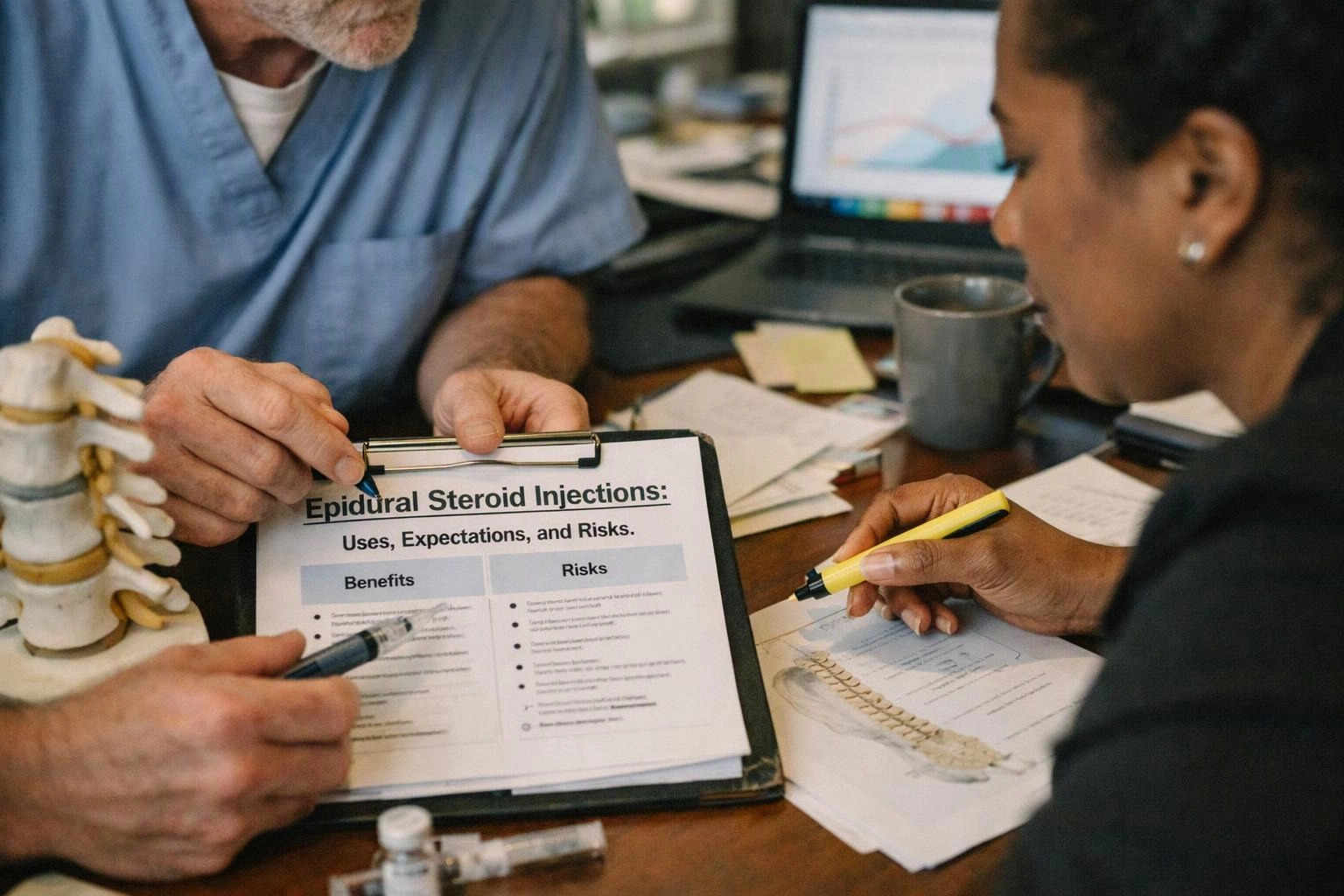
What Is an Epidural Steroid Injection?
An epidural steroid injection is a targeted treatment that places medication near irritated spinal nerves to reduce inflammation and pain. The medication enters the epidural space, which surrounds the spinal nerves.
A corticosteroid can calm nerve root inflammation. Some injections also include a local anesthetic for temporary pain control. We review your symptoms and health history before deciding whether this non-surgical pain treatment fits your goals.
What Conditions Can an Epidural Steroid Injection Treat?
Epidural steroid injections are used most often for radiating pain linked to irritated spinal nerves. We may discuss an injection when nerve symptoms continue to affect movement or daily activities.
Common conditions include sciatica, a herniated disc, lumbar radiculopathy, and cervical radiculopathy. Spinal stenosis and nerve root inflammation can also cause symptoms that may respond to targeted treatment.
These conditions may cause back pain, neck pain, leg pain, or arm pain. Our evaluation looks for nerve compression and other causes of nerve irritation.
What Benefits Can an Epidural Steroid Injection Provide?
An epidural steroid injection may reduce radiating pain and help you move more comfortably. Relief can support daily activities and make rehabilitation easier.
These benefits can vary by diagnosis, nerve involvement, and individual response. We use the injection as part of a broader treatment plan when it supports recovery.
When Do You Need an Injection and Rehabilitation Together?
An injection and rehabilitation work well together when pain limits movement but safe activity can support long-term recovery. We may coordinate symptom control with physical therapy and home exercise.
Sciatica treatment, herniated disc treatment, and radiculopathy treatment may all use this combined approach. We adjust the plan when symptoms or function change.
How Do Injections and Rehabilitation Work Together?
Injections can reduce symptoms while rehabilitation addresses movement, strength, and function. Our team uses both services when each supports a different part of recovery.
Our treatment planning connects the injection, physical therapy, and home exercise plan. We explain what each service does and how the services fit together.
What Should You Expect During the Injection?
The injection process starts with a clinical review and ends with brief monitoring for immediate problems. We explain each step before treatment begins.
Informed consent gives you a chance to ask questions before the injection. Our post-procedure instructions cover activity, symptom monitoring, and follow-up.
How Soon Can an Epidural Steroid Injection Help?
The timing of relief varies because the response depends on the medication, pain source, and level of nerve inflammation. A local anesthetic may affect pain before the corticosteroid has its full effect.
Some people notice a change soon after treatment, while others need more time to assess the response. We track your pain response and adjust the treatment plan based on your symptoms and function.
What Is Recovery Like After an Epidural Steroid Injection?
Recovery usually focuses on following activity guidance, tracking symptoms, and completing the planned follow-up. Mild post-injection soreness or a temporary change in symptoms can occur.
Keep a pain diary if our team recommends one. This record can show changes in pain, numbness, strength, and daily function.
We use follow-up findings to decide whether physical therapy, home exercise, or another treatment step fits next. Our Epidural Steroid Injections service is planned around your symptoms and recovery needs.
What Are the Risks and Warning Signs?
Epidural steroid injections have possible side effects and rare serious complications, so warning signs need prompt medical attention. We review injection risks before treatment and provide post-injection care instructions.
| Category | What to know |
|---|---|
| Common or temporary effects | Soreness, temporary numbness, or a short-term change in symptoms may occur. |
| Medication-related effects | Steroids may affect blood sugar, mood, sleep, or other health conditions. |
| Procedure-related complications | Bleeding, infection, allergic reaction, or nerve problems require medical evaluation. |
| Urgent warning signs | New weakness, worsening numbness, severe headache, fever, or loss of bladder or bowel control needs prompt medical attention. |
Contact our team promptly if symptoms concern you after treatment. Seek urgent medical care for severe or rapidly worsening symptoms.
Who May Need a Different Treatment Plan?
People with progressive weakness, serious warning signs, infection concerns, or bleeding risks may need a different evaluation before an injection. These concerns can change whether treatment is safe or appropriate.
Tell us about any bleeding disorder, blood-thinning medication, spinal infection, or uncontrolled medical condition. We review your medical history and symptoms before recommending an injection.
How We Decide Whether an Injection Fits Your Symptoms
We match the injection plan to your symptoms, examination, imaging, health history, and treatment goals. Premier Injury Specialists uses a pain management physician's evaluation to connect the findings with a safe treatment plan.
We consider pain distribution, the neurologic examination, and imaging findings together. We also discuss non-surgical pain treatment, physical therapy, and other options when they better match your needs.
Free Consultations are available for discussing your symptoms and treatment options. Our team explains what the evaluation includes before proceeding.
When Should You Ask About Epidural Steroid Injections?
Ask about an epidural steroid injection when radiating spinal pain continues to limit movement or daily activities. Persistent sciatica, cervical radiculopathy, or lumbar radiculopathy may call for a new treatment discussion.
We may consider an injection after conservative care has not provided enough relief. Our team reviews the available treatment options and explains how each choice fits your goals.
Questions About Epidural Steroid Injections
Can an epidural steroid injection help a herniated disc?
Yes, an epidural steroid injection may help a herniated disc when the disc irritates a spinal nerve. Premier Injury Specialists reviews your symptoms, examination, and imaging before recommending treatment.
Can an epidural steroid injection make pain worse?
Yes, temporary soreness or a short-term increase in symptoms can occur after an epidural steroid injection. Contact our team if pain keeps worsening or new weakness, numbness, fever, or severe headache develops.
What should you avoid after an epidural steroid injection?
Follow the activity guidance we provide after your injection. Avoid increasing activity beyond that plan, and contact us if symptoms change or a warning sign appears.
Can you have an epidural steroid injection if you take blood thinners?
Possibly, but blood-thinning medication requires careful medical review before an injection. Tell our team about every medicine you take, and don't stop a prescribed medicine without medical guidance.
When should you call a doctor after an epidural steroid injection?
Call a doctor promptly for new weakness, worsening numbness, fever, severe headache, or loss of bladder or bowel control. Seek urgent care when symptoms are severe or rapidly getting worse.
Premier Injury Specialists can help you review whether an epidural steroid injection fits your symptoms, recovery goals, and treatment plan. Contact our team to discuss your options and Free Consultations.
Get a Free Estimate