Imaging Guidance for Pain Procedures: Fluoroscopy and Ultrasound
Imaging guidance helps pain physicians place injections with live views of the target area. Premier Injury Specialists uses the procedure, anatomy, and clinical goal to determine whether fluoroscopy or ultrasound fits the injection.
Request an EstimateWhy Imaging Guidance Matters for Pain Injections
Image-guided injections help a pain physician see the target anatomy during treatment. Live views support careful needle placement and help match treatment planning to the patient’s condition.
Imaging can help our team confirm the intended path and avoid nearby structures. We review the symptoms, examination findings, medical history, and available diagnostic imaging before choosing the guidance method.
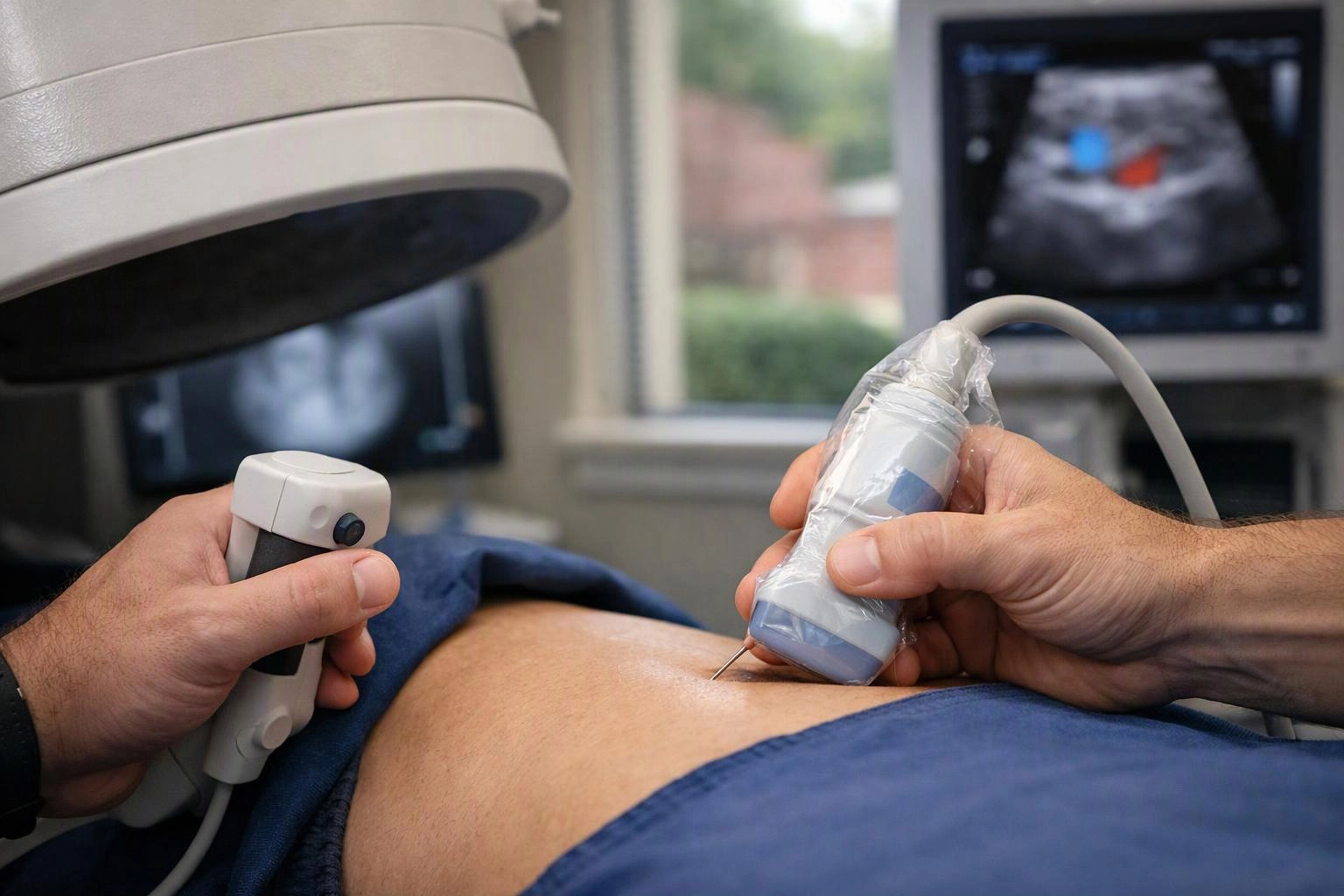
Fluoroscopy and Ultrasound Compared
Fluoroscopy uses live X-ray views, while ultrasound uses sound waves to show soft tissue and moving structures. The best option depends on the injection target, anatomy, and safety needs.
| Feature | Fluoroscopy | Ultrasound |
|---|---|---|
| Imaging method | Uses live X-ray guidance to show bone and spinal structures. | Uses sound waves to show soft tissue and moving structures. |
| Real-time views | Shows the needle and bony landmarks during the procedure. | Shows soft tissue, tendons, vessels, and other moving structures. |
| Contrast material | May support contrast confirmation during selected spinal injections. | Often supports needle guidance without X-ray contrast confirmation. |
| Radiation exposure | Involves radiation exposure, so radiation safety is part of planning. | Does not use ionizing radiation. |
Fluoroscopy can be especially useful when bone and spinal alignment guide the injection. Ultrasound can be useful when soft tissue imaging and movement matter most.
When Pain Injections May Need Both Imaging Services
Both imaging services may support one treatment plan when the target, anatomy, and safety needs call for different views. Our team selects the sequence based on the procedure and the patient’s clinical findings.
Using both methods doesn’t mean every patient needs both during the same visit. We choose the imaging service that answers the key safety and treatment question.
How Imaging Guidance Supports the Procedure
Pre-procedure review helps our team connect the symptoms with the planned injection target. We review the examination, medical history, prior treatment, and diagnostic images.
We identify the target anatomy before preparing the patient. During the procedure, real-time imaging supports needle guidance and helps us monitor the intended path.
For selected procedures, contrast material provides confirmation of the injection location. We also use sterile technique and explain post-procedure instructions before the patient leaves.
How Fluoroscopy and Ultrasound Work Together
The two services can work together through planning, targeted imaging, and follow-up decisions, with cost shaped by the procedure and imaging needs. Our team connects each imaging choice to the treatment goal.
A consultation helps us decide whether one service or both services fit the plan. We explain what the requested imaging contributes before treatment begins.
Which Imaging Guidance Fits Different Pain Procedures?
Fluoroscopy guidance often fits procedures where bone and spinal landmarks direct the needle path. This may include an epidural steroid injection, facet joint injection, medial branch block, or another spinal injection.
Ultrasound guidance can fit a joint injection or nerve block when soft tissue, vessels, and movement affect the target. The imaging choice depends on the body area, target depth, prior imaging, and clinical goal.
Our team may recommend fluoroscopic injection, an ultrasound-guided injection, or a plan that uses both. For more context, our guide to Epidural Steroid Injections explains how this spinal treatment fits within pain care.
What to Ask Before an Image-Guided Injection
Before an image-guided injection, ask how the imaging method matches the treatment target and your medical history. These questions help you understand the plan and raise safety concerns early.
Clear answers can help you understand the risks, benefits, and purpose of the procedure. We welcome questions before deciding on an image-guided pain procedure.
How to Request Imaging Referrals and Injection Guidance
Imaging referrals can support a pain evaluation when the record does not yet show the treatment target clearly. Our team reviews the referral, symptoms, examination findings, and existing medical records.
Bring available diagnostic imaging and reports to the consultation. These records can help us decide whether fluoroscopy, ultrasound, or another evaluation fits the planned injection.
For epidural steroid injections, we review the spinal findings and treatment goal before discussing guidance. Contact Premier Injury Specialists through our consultation page to request an evaluation.
Questions About Fluoroscopy and Ultrasound for Pain Injections
Are pain injections performed with X-ray guidance?
Yes, selected pain injections are performed with X-ray guidance when bone and spinal landmarks help guide the needle. Premier Injury Specialists chooses fluoroscopy when it supports the target, procedure, and safety plan.
What is fluoroscopy used for during a spinal injection?
Fluoroscopy shows live X-ray views of spinal structures and supports needle placement during selected spinal injections. Contrast confirmation may help verify the intended injection location.
Are nerve blocks performed under ultrasound guidance?
Yes, nerve blocks may be performed under ultrasound guidance when soft tissue, vessels, and movement affect the target. The selected method depends on the nerve location, anatomy, and treatment goal.
Does fluoroscopy use contrast material during a spinal injection?
Fluoroscopy may use contrast material during a spinal injection to support confirmation of the injection location. Our team reviews contrast considerations with you before the procedure.
Can medical imaging records change the choice of injection guidance?
Yes, medical imaging records can change the choice of injection guidance when they reveal different anatomy or a clearer treatment target. We review those records with your symptoms and examination findings.
Image-guided pain procedures depend on the target, anatomy, and clinical goal. Premier Injury Specialists can review your records and explain which imaging approach fits your injection plan.