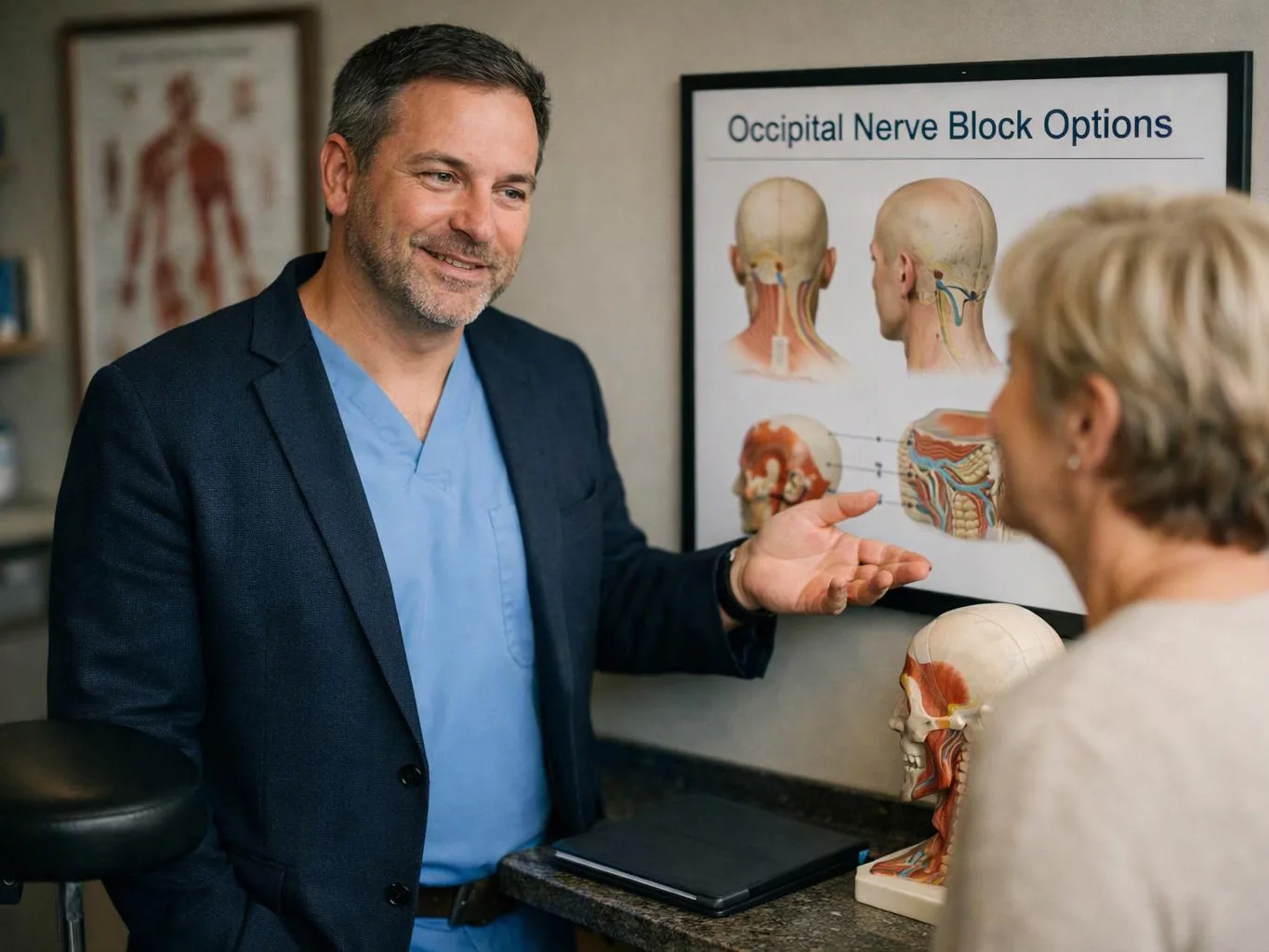
Sharp Pain at the Back of the Head: Understanding Occipital Neuralgia
Occipital neuralgia causes sudden, sharp, burning, or aching pain along the occipital nerves at the back of the head and neck. Treatment depends on the cause and may include medication, physical therapy, nerve blocks, or other pain care; Premier Injury Specialists evaluates symptoms to help guide the plan.
Request an Estimate
What Is Occipital Neuralgia?
Occipital neuralgia is a nerve pain condition that affects nerves running from the upper neck into the scalp. The occipital nerves include the greater occipital nerve, lesser occipital nerve, and third occipital nerve.
Nerve irritation can cause sharp pain at the back of the head, upper neck, and scalp. We look at the pain pattern and possible causes during a medical evaluation.
What Does Occipital Neuralgia Feel Like?
Occipital neuralgia feels like sharp, electric, burning, or aching pain that travels from the upper neck toward the back or side of the head.
Symptoms can come in brief bursts or continue as a steady ache. The pain may follow one side of the scalp or affect both sides.
These symptoms can overlap with other headache disorders. We use the full pattern, not one symptom alone, to guide the next step.
What Causes Occipital Neuralgia?
Occipital neuralgia can develop when an occipital nerve becomes irritated, compressed, inflamed, or injured.
Our team asks about injuries, daily activities, and changes in neck movement. That history helps connect symptoms with possible nerve irritation.
Head or neck injury can trigger symptoms even when the skin looks normal. Related concerns may include Whiplash Symptoms That May Need Medical Evaluation.
How Is Occipital Neuralgia Different From Other Headaches?
Occipital neuralgia usually follows the occipital nerve path, while other headaches have different pain patterns and associated symptoms.
The comparison below can help explain why a careful medical evaluation matters.
| Condition | Pain location | Pain quality | Associated symptoms |
|---|---|---|---|
| Occipital neuralgia | Upper neck, back of the scalp, or side of the head | Sharp, shooting, burning, or electric | Scalp tenderness and neck pain |
| Migraine | Often one side of the head | Pulsing or throbbing | Nausea or sensitivity to light and sound |
| Tension headache | Both sides or around the head | Pressure or tightness | Neck or shoulder tension |
| Cervicogenic headache | Head pain that starts in the neck | Aching or steady pain | Reduced neck movement |
| Cluster headache | Around one eye | Severe and piercing | Watery eye, nasal symptoms, or restlessness |
These patterns are general guides, not a diagnosis. We check for overlap when symptoms do not fit one clear category.
How Is Occipital Neuralgia Diagnosed?
Occipital neuralgia is diagnosed through a review of symptoms, a physical examination, and testing when another condition needs evaluation.
We review your medical history and pain pattern first. A neurological examination and head and neck examination can show scalp tenderness, neck sensitivity, or changes in movement.
Diagnostic imaging may help assess the head or neck when another condition needs review. A diagnostic nerve block may also help show whether an occipital nerve contributes to the pain.
How Is Occipital Neuralgia Treated?
Occipital neuralgia treatment may include medication, physical therapy, occipital nerve blocks, or other procedures based on the cause and response to care.
Medication options may include pain medication, anti-inflammatory medication, or nerve pain medication. Physical therapy can address posture, neck movement, and muscle tension when those factors add strain.
Our team may discuss occipital neuralgia treatment when symptoms point to nerve irritation. Occipital nerve blocks, radiofrequency treatment, or surgical treatment may be considered when the clinical findings support them.
The treatment plan depends on your symptoms, examination findings, and response to earlier care. Our goal is to identify useful pain relief options while checking for the cause.
What Can Help Prevent Occipital Neuralgia Flare-Ups?
Prevention focuses on reducing neck strain, managing muscle tension, and addressing activities that trigger symptoms.
We can help identify patterns that place extra stress on the upper neck. Small changes may support a broader treatment plan.
These steps don't replace an evaluation when pain is new, severe, or worsening. We can help connect flare-ups with movement, posture, or injury history.
When Should You Seek Care for Pain at the Back of Your Head?
Seek urgent medical care for sudden severe head pain or pain with neurological symptoms, fever, confusion, or a recent injury.
Red flag symptoms can include weakness, vision changes, and speech problems. New or worsening headache also needs prompt medical attention, especially after a head or neck injury.
We can evaluate ongoing neck pain or headache symptoms when urgent warning signs aren't present. Seek urgent medical care first when symptoms are sudden, severe, or linked with neurological changes.
What to Expect From Premier Injury Specialists
Premier Injury Specialists reviews your symptoms and medical history, explains suitable treatment options, and outlines upfront pricing before care.
Our pain management physician connects your examination findings with a clear treatment plan. We explain why each option may fit your symptoms and answer questions before proceeding.
Our team also discusses chronic headache treatment when symptoms continue or affect daily life. You can request an appointment through our contact page.
Questions About Occipital Neuralgia
Can occipital neuralgia cause neck pain?
Yes, occipital neuralgia can cause neck pain when an occipital nerve or nearby muscle becomes irritated. Premier Injury Specialists checks neck movement, muscle tension, and the pain pattern during evaluation.
Can occipital neuralgia cause pain behind the eyes?
Yes, occipital neuralgia can cause referred pain behind an eye or near the side of the head. Pain behind the eye can also occur with other headache disorders, so the full symptom pattern matters.
Can stress make occipital neuralgia worse?
Yes, stress can make occipital neuralgia worse by increasing muscle tension in the neck and shoulders. Managing stress may support pain relief, but ongoing symptoms still need proper evaluation.
Can occipital neuralgia go away on its own?
Occipital neuralgia can improve when a temporary source of nerve irritation settles. Persistent, severe, or recurring pain needs medical evaluation to identify the cause and guide treatment.
What happens if occipital neuralgia is left untreated?
Untreated occipital neuralgia may continue to cause head and neck pain, scalp sensitivity, and activity limits. Evaluation can also help rule out other causes of headache or neurological symptoms.
Premier Injury Specialists can review sharp pain at the back of the head and help explain your care options. Contact our team to discuss an evaluation and a treatment plan.
Contact Premier Injury Specialists
Get a Free Estimate