Herniated Disc Symptoms: When to Consider a Pain Evaluation
Herniated disc symptoms may include localized pain, numbness, tingling, or weakness that travels into an arm or leg. Premier Injury Specialists evaluates the symptoms, checks for nerve involvement, and explains treatment options based on the findings.
Request an EstimateWhat Does a Herniated Disc Feel Like?
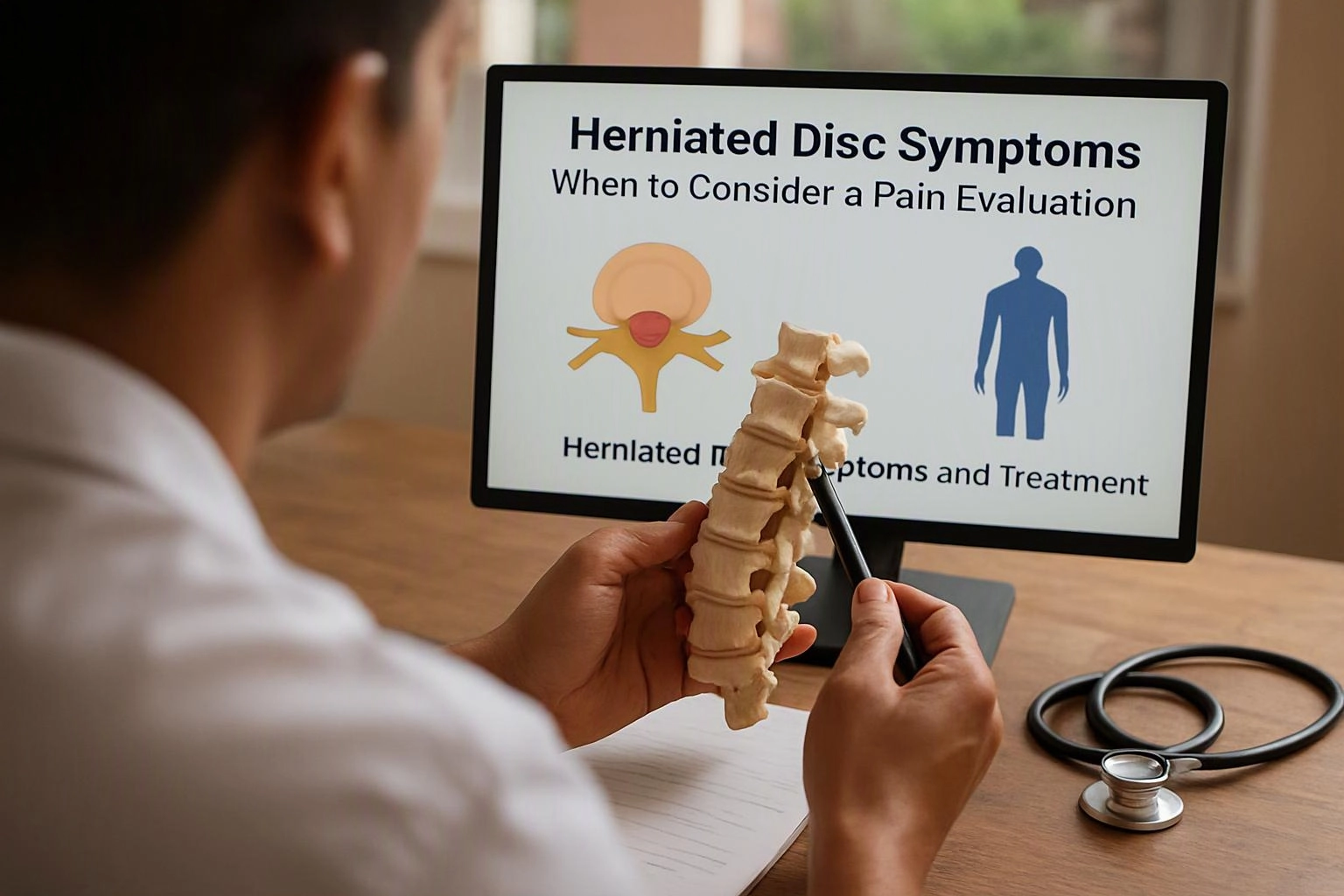
Herniated disc symptoms can include pain near the spine and nerve symptoms that travel into an arm or leg. An intervertebral disc can press on a spinal nerve when its inner material moves through a weak area.
Symptoms depend on the disc location and the spinal nerve root involved. We compare the pain pattern with your physical findings before choosing treatment.
Can a Herniated Disc Cause Pain Down an Arm or Leg?
Yes, a herniated disc can irritate a nerve root and send pain, tingling, numbness, or weakness into an arm or leg. Cervical radiculopathy affects nerves from the neck, while lumbar radiculopathy affects nerves from the lower back.
Sciatica is a common pattern of lumbar radiculopathy that follows the sciatic nerve into the buttock and leg. Radiating pain may feel sharp, burning, electric, or aching. We check whether the symptoms match a specific nerve root or suggest another cause.
What Can Cause a Herniated Disc?
A herniated disc can develop when the disc’s outer layer weakens and its inner material pushes outward. The condition may result from gradual wear, a sudden injury, or both.
A disc bulge and a herniated disc describe different disc changes, but both can affect nearby nerves. We use the symptom pattern and examination findings to decide whether the disc change matters.
How Can You Reduce the Risk of Disc Problems?
Spine health improves when daily movement places less strain on the cervical and lumbar spine. Prevention cannot remove every risk, but it can support safer movement and better control.
Choose activities that match your current ability and increase effort gradually. Stop an activity that causes new weakness, spreading numbness, or severe pain.
When Should You Consider a Pain Evaluation?
You should consider a pain evaluation when symptoms persist, spread into an arm or leg, limit movement, or include numbness or weakness. A pain management physician can look for nerve involvement and explain non-surgical treatment options.
Persistent back pain or neck pain deserves attention when it interferes with sleep, work, walking, lifting, or daily tasks. We review the pattern, triggers, prior care, and functional limits to guide the next step.
A pain evaluation may also help when pain that is not improving continues despite rest, activity changes, medication, or therapy. Our team can reassess the diagnosis and discuss whether additional testing or treatment is appropriate.
Which Herniated Disc Symptoms Need Prompt Medical Attention?
Progressive weakness, new bladder or bowel problems, and numbness around the inner thighs require prompt medical attention. These warning signs can indicate serious nerve or spinal cord compression.
Do not wait for a routine pain visit when these symptoms appear. Seek urgent medical care so the cause can be assessed quickly.
How We Evaluate Herniated Disc Symptoms
We evaluate herniated disc symptoms by reviewing the pain pattern and checking strength, sensation, reflexes, and movement. Our medical history review also covers prior injuries, health conditions, medicines, and earlier treatment.
A physical examination helps us compare the affected side with the other side. A neurologic examination checks muscle strength, sensation, reflexes, walking, and signs of nerve root irritation.
Diagnostic imaging may help when symptoms persist, findings are concerning, or treatment decisions depend on the disc and nerve anatomy. Magnetic resonance imaging can show the intervertebral disc, spinal nerves, and nearby soft tissues. We match imaging results with your symptoms because an image alone does not explain every pain problem.
What Treatments May Help Herniated Disc Pain?
Herniated disc treatment depends on symptom severity, nerve findings, imaging results, and how symptoms respond to earlier care. We discuss the trade-offs of each option and adjust care when the response is limited.
| Treatment approach | When it may help | What we consider |
|---|---|---|
| Conservative treatment | Milder symptoms without worsening neurologic findings | Activity limits, medication, home care, and treatment response |
| Physical therapy | Limited motion, reduced strength, or movement-related pain | Safe exercises, posture, mobility, and functional goals |
| Medication | Pain or inflammation that affects daily activity | Current medicines, health history, risks, and expected benefit |
| Epidural steroid injection | Radiating arm or leg pain linked to nerve irritation | Pain location, imaging, nerve findings, and earlier treatment response |
| Spine surgery referral | Worsening neurologic problems or symptoms that remain disabling | Strength changes, bladder or bowel symptoms, imaging, and overall risk |
Cervical radiculopathy treatment may differ from lumbar radiculopathy treatment because the affected nerves and risks differ. We explain why a recommended option fits the findings before moving forward.
What If Herniated Disc Pain Isn't Improving?
If herniated disc pain isn't improving, we reassess the diagnosis, nerve symptoms, imaging, and treatment response before adjusting care. Persistent pain may reflect ongoing nerve irritation, another spinal condition, or a problem outside the disc.
A pain reassessment can show whether the current plan needs a different focus. We may review physical therapy, medication, or Epidural Steroid Injections based on your findings and goals.
Our team can also discuss the next step in Herniated Disc Treatment when symptoms continue to limit daily life. New weakness or bladder and bowel changes require prompt medical attention.
How Do You Prepare for a Pain Evaluation?
You can prepare for a pain evaluation by recording symptom changes, prior treatment, medicines, and activities that worsen or relieve pain. Clear details help us connect your symptoms with examination findings.
Bring questions about expected benefits, risks, and alternatives. We use your information to create a plan that fits the nerve findings and your daily goals.
Questions About Herniated Disc Symptoms
Can a herniated disc heal without surgery?
Yes, some herniated discs improve with non-surgical treatment when nerve findings remain stable. Premier Injury Specialists reviews your symptoms, examination, and treatment response before recommending continued conservative care or a change in plan.
How is a herniated disc diagnosed?
A herniated disc is diagnosed through medical history, physical examination, neurologic testing, and imaging when needed. We compare magnetic resonance imaging findings with your pain pattern, strength, reflexes, and sensation.
Can a herniated disc cause numbness without pain?
Yes, a herniated disc can cause numbness without strong pain when a spinal nerve is irritated. New or spreading numbness needs evaluation, especially when it occurs with weakness or changes in bladder or bowel control.
What is the difference between a herniated disc and a bulging disc?
A bulging disc extends outward while the disc’s outer layer remains more intact, and a herniated disc involves inner material pushing through a weakened outer layer. Either condition can irritate a nerve, so symptoms and examination findings guide treatment.
Can coughing or sneezing make herniated disc pain worse?
Yes, coughing or sneezing can briefly increase herniated disc pain when pressure irritates a spinal nerve. Pain that consistently worsens with these actions, especially with numbness or weakness, deserves a pain evaluation.
Consider a Herniated Disc Pain Evaluation
Herniated disc symptoms can change over time, so the right decision depends on pain patterns, nerve findings, and treatment response. Premier Injury Specialists provides Free Consultations to help you understand the next step.
Contact our team to discuss your symptoms and arrange an evaluation.