Skip to content

Post-Surgical Pain Treatment in Stockbridge, Georgia

We help patients manage pain after surgery through evidence-based care and individualized treatment plans. Our Stockbridge office serves patients across Henry County and nearby communities.

4.9 · 119 ReviewsUpfront, Transparent PricingServing 12 CommunitiesMon-Fri: 8 am–6 pm, Sat-Sun: Closed
Post-Surgical Pain Treatment helps Stockbridge patients who still hurt after surgery or struggle to regain movement. Premier Injury Specialists reviews the pain pattern, prior care, and daily limits before planning the next step. Pain can involve the surgical area, nearby joints, muscles, or nerves. We may provide medication management, rehabilitation guidance, or minimally invasive treatment when clinically appropriate.

Our Track Record

Average Rating
4.9
Customer Reviews
119

What improves when post-surgical pain gets proper attention

You get a clearer explanation of what may be driving the pain.

Your treatment plan matches your symptoms, medical history, and daily limits.

Medication concerns become part of a supervised pain discussion.

Movement goals guide rehabilitation and follow-up care.

You receive support for lasting improvement without assuming one treatment fits every patient.

Two beige armchairs sit beside a small round table with a potted plant in a sunlit room
About

How care addresses pain after surgery

Post-surgical pain treatment starts with a medical review of what changed after the operation. We discuss the procedure, pain location, pain quality, medicines, sleep, and movement limits. The plan may include medication management, physical rehabilitation guidance, injury-related pain care, or minimally invasive treatment when appropriate. The right choice depends on the findings and your current needs. Bring your surgical records, medication list, imaging reports, and notes about pain changes when available. These details help us connect the symptoms with the treatment history and set useful next steps.

What Post-Surgical Pain Treatment Covers

Post-surgical pain treatment is medical care that identifies and treats pain that continues after an operation.

  • Post-surgical pain treatment differs from routine surgical follow-up because it focuses on pain sources, function, medicines, and targeted care.
  • Patients in Stockbridge can receive this care through our office, which serves Henry County and nearby communities.
Process

The steps behind post-surgical pain care

1

Review the surgical history

We examine the operation, recovery course, current medicines, and pain changes so the assessment starts with the right clinical context.

2

Map the pain and function limits

We assess where pain occurs, how it feels, what triggers it, and which daily movements it affects.

3

Build the treatment plan

We create an individualized plan that may include medication management, rehabilitation guidance, or minimally invasive care when clinically appropriate.

4

Track the response

We review symptom changes, movement goals, and concerns so the plan can be adjusted as care continues.

What to bring before post-surgical pain care

These details help us understand your recovery and plan the visit around your current needs.

  • A list of current medicines, including pain medicines and supplements.
  • Surgical records or discharge instructions when you have them.
  • Imaging reports and related medical records.
  • A short note about pain location, severity, triggers, sleep, and movement limits.
  • Questions about medicines, rehabilitation, procedures, or follow-up care.

The Premier Injury Specialists Standard

Patient Support

We explain each post-surgical pain step, answer questions, and support patients throughout the care journey.

Individualized Planning

We shape each treatment plan around the patient’s surgical history, pain pattern, medical needs, and movement goals.

Evidence-Based Care

We consider evidence-based, minimally invasive, and nonsurgical options when clinical findings make them appropriate.

Customer Reviews for Post-Surgical Pain Treatment in Stockbridge

4.9(119 Customer Reviews)View our Google Business Profile
Honda King (Honda king)
Edited a year ago
Verified on Google
It was my first experience getting a surgerical procedure done and they was open and transparent, and that's what makes me feel comfortable I feel good and the day after like they told me.
MariiBTv
MariiBTv
a year ago
Verified on Google
I had an amazing experience. The staff was super friendly and helpful and everything the doctor said I would feel and experience I did and they was right there every step of the way making sure I was okay and the nurse is so supportive from beginning to recovery… I definitely recommend this facility
Nest Hhome
Nest Hhome
11 months ago
Verified on Google
I can’t thank Stacey and Dr. Vyas enough for their kindness and professionalism. Stacey was so sweet and attentive, and Dr. Vyas made me feel confident and cared for. The procedure went so smoothly. I felt safe and supported the whole time. Truly a wonderful experience!!

Questions about pain after surgery

Who provides post-surgical pain treatment in Stockbridge?

Premier Injury Specialists provides post-surgical pain treatment in Stockbridge through physician-led pain management care. We review the surgical history, pain pattern, medicines, and movement limits. Care may include medication management, rehabilitation guidance, injury-related pain care, or minimally invasive treatment when appropriate. The plan is based on your condition and clinical needs.

What changes the cost of post-surgical pain care?

The cost depends on the evaluation, records reviewed, treatment selected, and follow-up needs. A consultation gives us the information needed to discuss the recommended care and quote details. Bring your medicine list and available surgical records so the visit starts with useful clinical context. We provide upfront pricing before treatment decisions are made.

What should I bring to my first appointment after surgery?

Your surgical records, imaging reports, medicine list, and symptom notes help us assess post-surgical pain. Include the operation date when known, pain triggers, sleep changes, and movement limits. We use these details to connect your recovery history with the current problem. Patients can also bring questions about medicines, rehabilitation, and procedures.

Can treatment include an injection after surgery?

Minimally invasive treatment may be considered when the clinical assessment supports it. The choice depends on the pain source, medical history, prior treatment, and suitability for that approach. We explain the reason, expected process, and relevant risks before moving forward. Results vary, so follow-up focuses on symptoms and function.

Can I use a strong non-opioid medicine after surgery?

Medication choices depend on your health history, current medicines, surgery, and pain source. No single non-opioid medicine fits every patient. We review what you already take and discuss medication management within a broader care plan. Don’t change prescription medicines without guidance from a licensed medical provider.

Should I see a pain physician or an orthopedic doctor after surgery?

A pain physician focuses on pain sources, medicine management, function, and targeted treatment options after surgery. An orthopedic doctor may focus on the surgical structure, healing, or a new structural concern. Some patients need coordinated care across clinical professionals. We review your symptoms and surgical history to help identify the right next step.

How do I know if pain after surgery needs a new assessment?

A new assessment helps when pain persists, changes, limits movement, or affects sleep and daily tasks. Record what triggers the pain and bring your current medicine list. We review the pattern and recovery history before recommending care. Seek prompt medical attention for severe or rapidly changing symptoms or other concerning signs.

Common Mistakes With Post-Surgical Pain Treatment

  • Ignoring pain changes after the incision heals can hide a nerve, joint, muscle, or movement problem. We review the full pain pattern instead of focusing only on the incision.
  • Changing prescription medicines without clinical guidance can create avoidable risks. We review current medicines and discuss a supervised plan.
  • Skipping rehabilitation guidance can leave movement limits unresolved. We connect daily function with safe activity goals and follow-up.
  • Arriving without surgical records or a medicine list can slow the clinical review. We ask for those details so treatment planning starts with the right context.

Key Points About Post-Surgical Pain Treatment

  • Pain can continue after surgery even when the incision looks healed.
  • Pain location, quality, triggers, and movement limits guide the assessment.
  • Medication management forms part of the wider care plan.
  • Rehabilitation guidance connects treatment with daily function.
  • Minimally invasive care is considered only when clinically appropriate.
Contact

Discuss post-surgical pain care in Stockbridge

Premier Injury Specialists starts with a focused review of your surgical history, symptoms, medicines, and movement limits. Request an appointment to discuss your treatment options in Stockbridge.
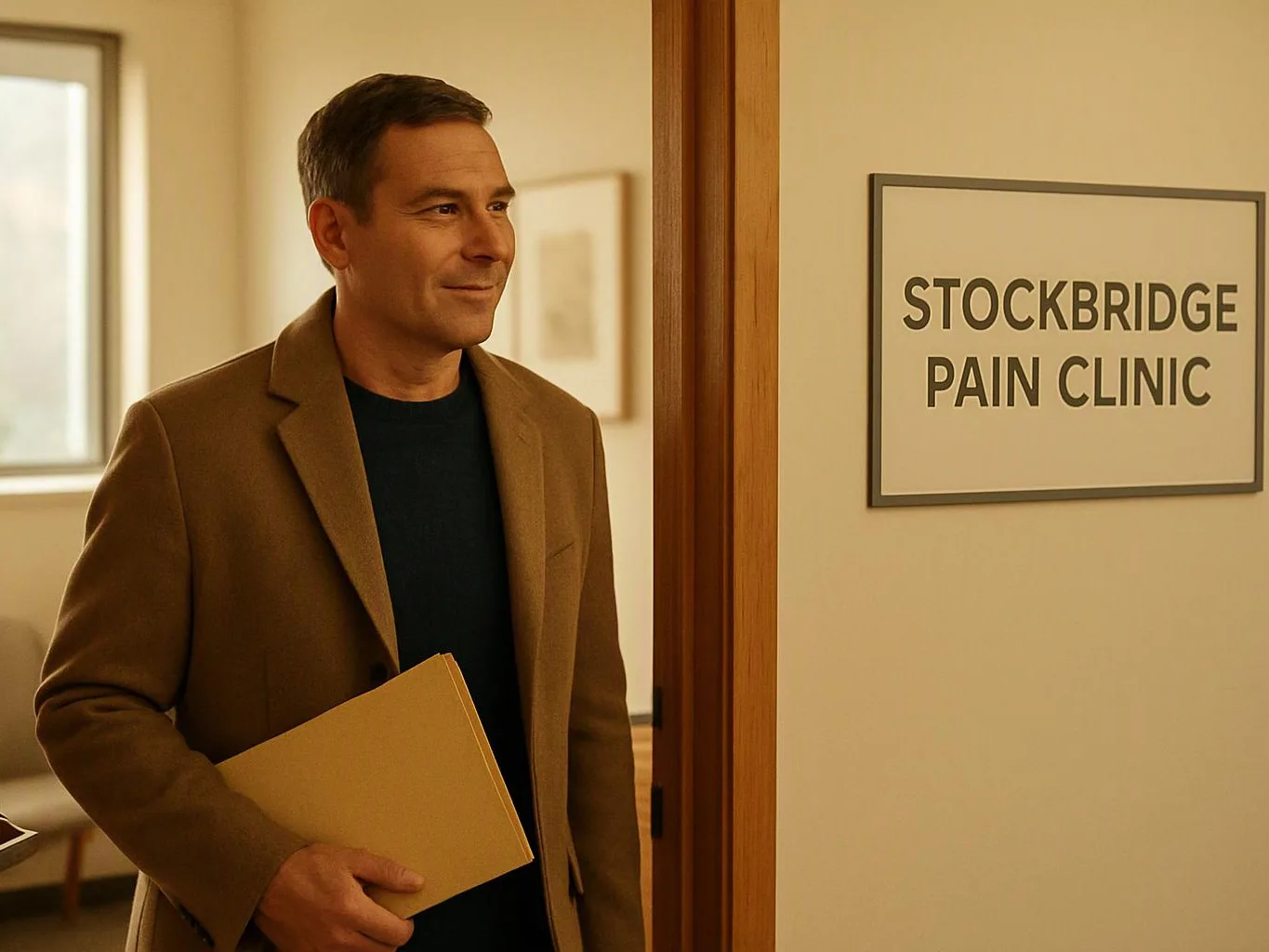
A man in a brown coat holds a folder beside a sign reading “STOCKBRIDGE PAIN CLINIC” in a hallway
Scenarios

When Customers Call Us About Post-Surgical Pain Treatment

1

Pain continues after the incision heals

A healed incision doesn’t always mean the deeper pain problem has settled. Pain may involve nerves, joints, muscles, or changes in movement after surgery. Bring your surgical records and current medicine list, then note what activity triggers symptoms. Our evaluation connects those details with a treatment plan for your needs in Stockbridge and the surrounding area.

2

Movement remains hard after surgery

Pain that limits walking, lifting, reaching, or sleep can slow a return to daily life. The key question is how symptoms change with movement and rest. We review those limits, discuss rehabilitation guidance, and consider other care when appropriate. Patients from Henry County can request an appointment through our Stockbridge office.

3

Concern about medicine after surgery

Some patients worry about side effects, medicine changes, or relying on over-the-counter pain relief. Bring every current medicine and describe what helps or causes problems. We review medication management as part of the wider pain plan, alongside function and recovery goals. A consultation gives you a safer way to discuss the next step.
Our Other Services

Knee Pain TreatmentKnee pain can interfere with stairs, walking, exercise, and work demands. A focused evaluation considers cartilage wear, arthritis, prior injury, and movement limits, then guides medication, therapy, or joint injection options.
Auto Accident Injury EvaluationAfter a crash, neck pain, back pain, or numbness can make daily tasks difficult. A clinical exam reviews collision injuries, range of motion, and nerve symptoms, then guides imaging referrals and treatment planning for a clearer recovery path.
Epidural Steroid InjectionsLeg or arm pain from an irritated spinal nerve can limit walking, lifting, or sleep. An epidural steroid injection places medication near the affected nerve root to calm inflammation and support movement during rehabilitation.
Facet Joint InjectionsArthritis in the small facet joints can cause painful, restricted neck or back movement. Facet joint injections deliver anesthetic and corticosteroid near the irritated joint, helping identify the pain source and improve everyday function.
Medial Branch BlocksBack or neck pain from facet joints may continue despite ordinary treatment. Medial branch blocks temporarily numb the nerves serving those joints, helping confirm the source and guide later radiofrequency ablation when appropriate.
Occipital Nerve BlocksPain at the back of the head can spread toward the scalp, eyes, or temples. An occipital nerve block targets irritated occipital nerves with local anesthetic and steroid, reducing headache symptoms and improving comfort.
(478) 607-6106