
What Is the Spinal Cord?
The spinal cord is a long bundle of nerve tissue that connects the brain with nerves throughout the body. It runs inside the spinal canal and carries movement, feeling, and reflex signals. Pressure or damage near the cord can affect pain, strength, balance, or bladder and bowel control.
Quick Facts About Spinal Cord
Category
Central nervous system structure
Used for
Carrying nerve signals
Common confusion
Often confused with spinal nerves
Often discussed with
Spinal Stenosis Treatment, Imaging Referrals
Key Takeaways About Spinal Cord
- The spinal cord is part of the central nervous system.
- The cord travels through the spinal canal.
- The spinal cord is not the same as a spinal nerve.
How Spinal Cord Works
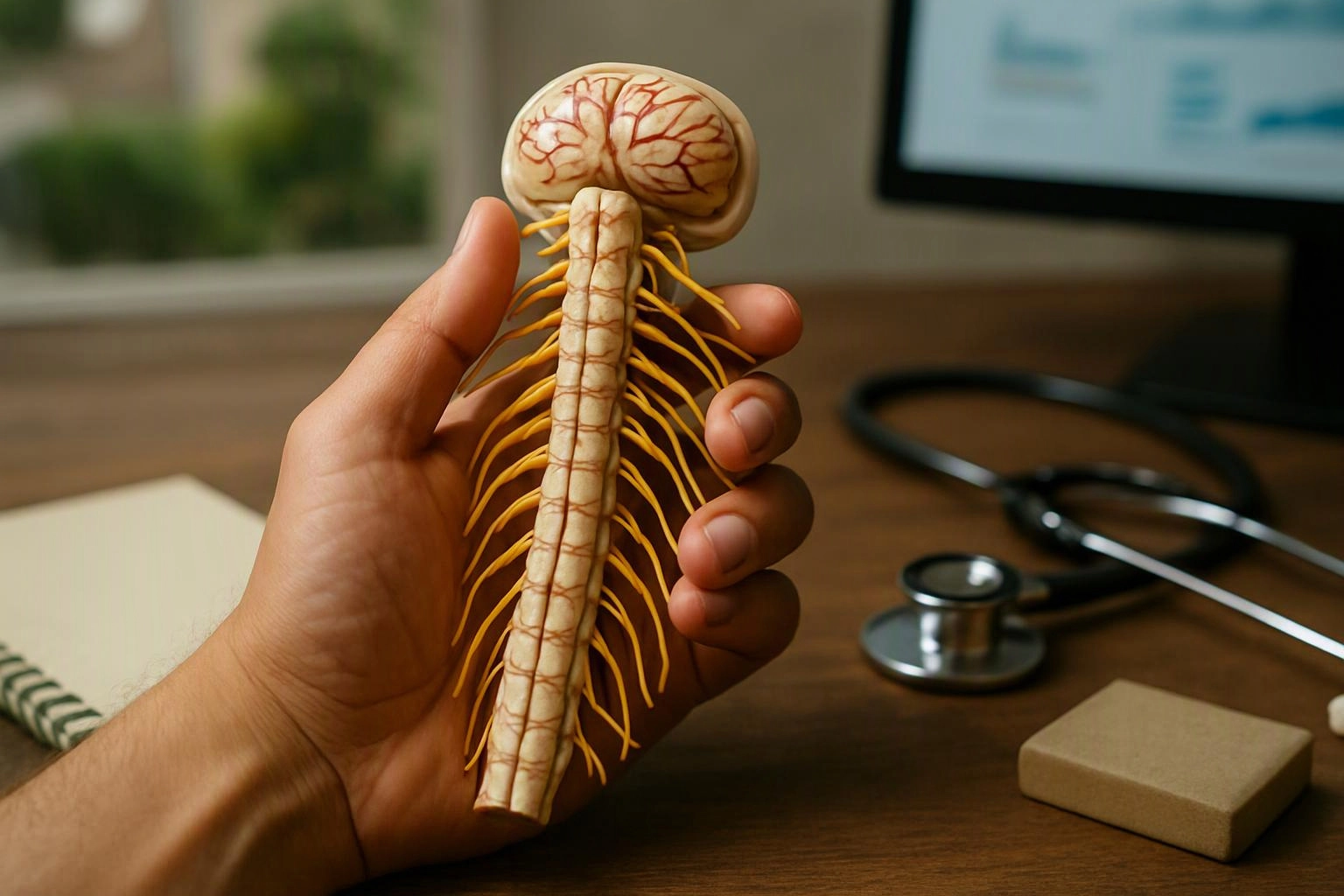
The spinal cord carries messages between the brain and the body. Signals from the brain help control movement. Signals from the body report pain, touch, temperature, and position.
Related glossary terms: Spinal Nerve, Nerve Root, Magnetic Resonance Imaging.
The cord sits inside the spinal canal, which is formed by the vertebrae. Nerve roots branch from the cord and leave the spine through small openings. In spinal stenosis, a narrowed canal can press on the cord or nearby nerve tissue. The location and amount of pressure can shape symptoms.
Magnetic Resonance Imaging can show the cord, the spinal canal, discs, and areas of pressure. A clinician also checks strength, sensation, walking, reflexes, and other nerve signs. These findings help separate spinal cord problems from nerve root pain.
From the Premier Injury Specialists team
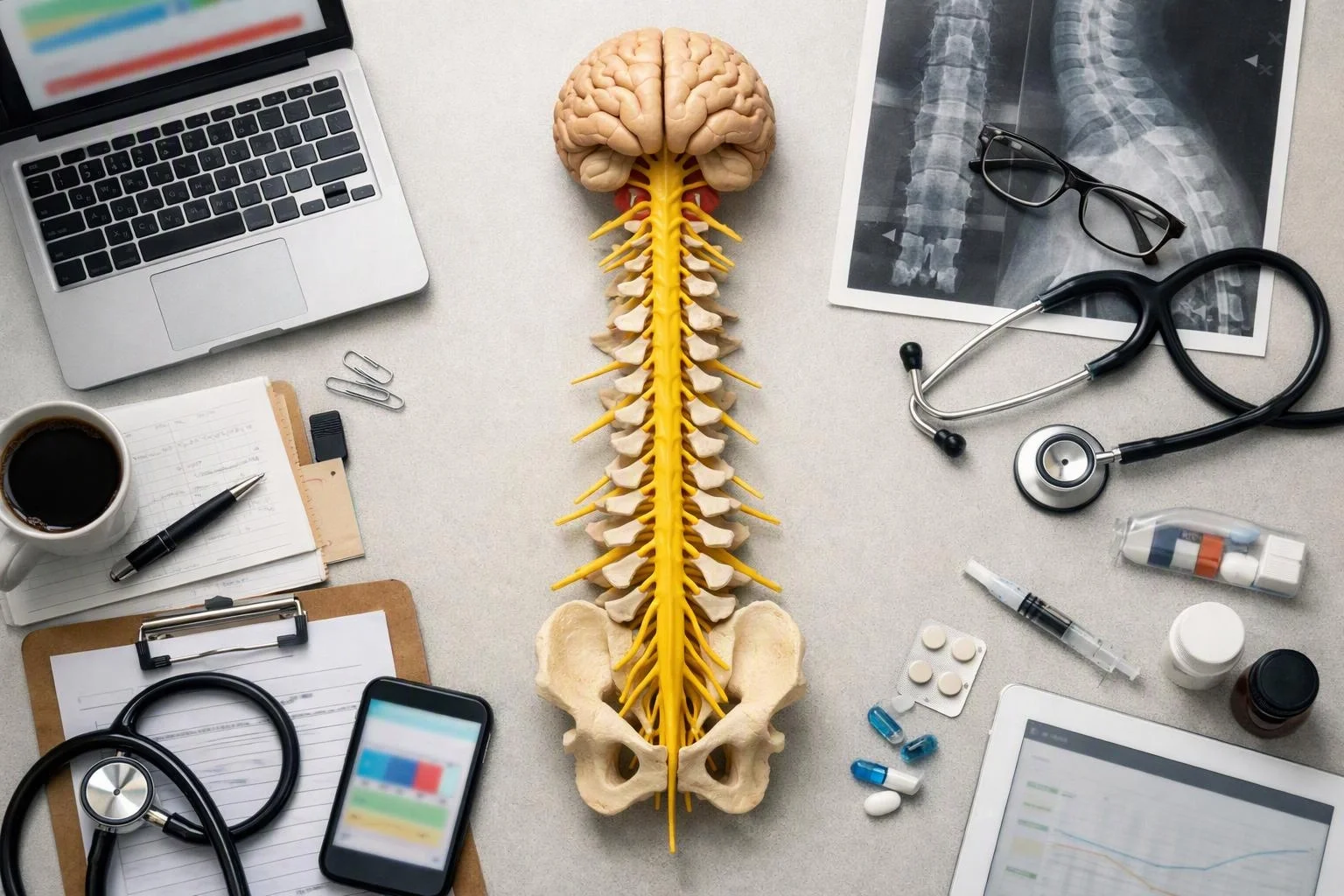
When we assess spinal stenosis, we review imaging and the physical exam together. We check whether symptoms suggest pressure on the spinal cord, a nerve root, or both. We also note changes in walking, balance, strength, sensation, and reflexes because those details can guide the next step.
Spinal Cord in Practice: A Real-World Example
A person with spinal stenosis may report leg heaviness, balance trouble, or changes in sensation while walking. The clinical exam and imaging help show whether narrowing affects the spinal cord or nearby nerve roots.
Related Services
Related Terms
Spinal Nerve
A Spinal Nerve is a bundle of nerve fibers that carries signals between the spinal cord…
Nerve Root
A Nerve Root is the part of a spinal nerve that leaves the spinal cord through…
Magnetic Resonance Imaging
Magnetic Resonance Imaging is a medical imaging method that uses a strong magnetic field and radio…
Cauda Equina Syndrome
Cauda Equina Syndrome is a serious condition caused by pressure on the bundle of nerves at…
Premier Injury Specialists
Have Questions About Spinal Cord?
Contact Premier Injury Specialists for practical guidance on Spinal Cord and related pain management physician work in Stockbridge.