Pain Management Treatment Options: Injections, Nerve Blocks, and More
Types of pain management treatments include injections, nerve blocks, radiofrequency ablation, physical therapy, medication plans, and self-care. Premier Injury Specialists evaluates your symptoms and goals to help match treatment options to your condition.
Request an EstimateWhat Are the Main Types of Pain Management Treatments?
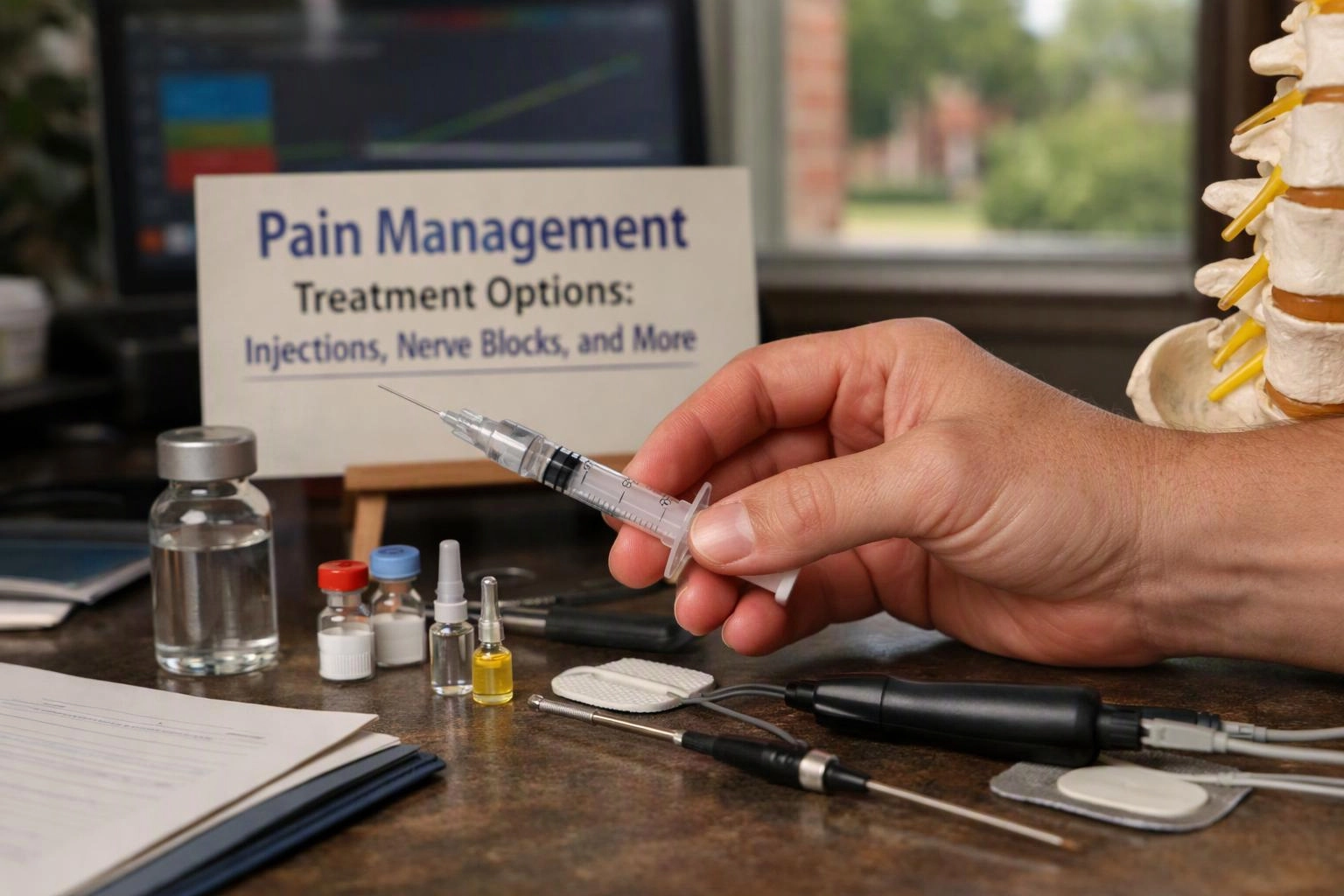
Pain management treatments use targeted procedures, movement-based care, medicines, and daily strategies to reduce pain and improve function.
We begin by looking for the likely pain source. Our pain management physician reviews your symptoms, medical history, examination findings, and treatment goals.
Interventional pain treatment can target irritated nerves, joints, muscles, or spine structures. Conservative care may include physical therapy, activity changes, education, and medication management.
Which Pain Injections and Nerve Blocks Are Available?
Pain injections and nerve blocks deliver medicine near an irritated nerve, joint, spine structure, or muscle to target a suspected pain source.
We select the injection site based on your symptoms and examination. The table below shows how common options are used.
| Treatment | Common target | Purpose |
|---|---|---|
| Epidural steroid injection | Epidural space near a spinal nerve | Reduce inflammation linked to radicular pain |
| Facet joint injection | Facet joint | Assess and treat facet-related back or neck pain |
| Medial branch block | Medial branch nerve | Provide diagnostic information about facet-mediated pain |
| Trigger point injection | Tight muscle or trigger point | Ease muscle tension and local pain |
| Joint injection | Painful or inflamed joint | Reduce joint inflammation and support movement |
Epidural Steroid Injections
Epidural steroid injections place medication near the epidural space around an irritated spinal nerve.
Spinal nerve irritation can cause radicular pain that travels into an arm or leg. The injection may reduce inflammation around the nerve and support movement.
We review your symptoms and imaging before recommending this option. Our epidural steroid injection treatment page explains its uses, expectations, and risks.
Facet Joint Injections and Medial Branch Blocks
Facet joint injections place medication near small spine joints that can contribute to axial back pain or neck pain.
A medial branch block targets a medial branch nerve that carries signals from a facet joint. We may use this diagnostic block to assess whether facet pain is part of your condition.
We use the results to guide treatment planning. A positive treatment response may support discussion of radiofrequency ablation.
Trigger Point and Joint Injections
Trigger point injections target tight areas in muscle that can cause local pain and limited movement.
Joint injections address joint inflammation and may help with joint pain. Depending on the treatment plan, medication can include a corticosteroid, local anesthetic, or both.
We match the injection to the suspected pain source. We also consider how pain affects walking, lifting, sleep, and daily activity.
How Does Radiofrequency Ablation Help With Pain?
Radiofrequency ablation uses controlled heat to reduce pain signals from selected nerves after diagnostic testing supports that pain source.
This treatment may be considered when a medial branch nerve contributes to facet-mediated pain. It does not repair every cause of back pain or neck pain.
We review the diagnostic block and your treatment response before discussing ablation. Our goal is to reduce pain signals so you can work toward better function.
Can Pain Management Include Non-Surgical Care?
Yes, non-surgical pain management can include physical therapy, exercise, medication planning, education, and targeted procedures.
Physical therapy can improve strength, flexibility, balance, and movement habits. Therapeutic exercise may support recovery when pain has reduced enough for active care.
Medication management focuses on safe planning around your symptoms and health history. Activity modification can also reduce strain while you build function.
When Do Patients Need More Than One Pain Treatment?
Patients may need combined treatments when pain has more than one source or when one treatment does not address movement and function.
We build the treatment plan around your pain pattern and functional goals. Common situations include:
How Can Pain Treatments Work Together?
Pain treatments can work together when each option has a clear role in diagnosis, symptom control, movement, or longer-term planning.
Our team sequences care based on your symptoms, treatment response, and functional needs.
How Is the Right Pain Management Treatment Chosen?
The right treatment depends on the pain source, symptoms, health history, examination findings, and personal goals.
What Should You Ask Before Starting Treatment?
Before treatment, ask which structure may cause your pain, what the treatment aims to change, and how progress will be reviewed.
Ask about treatment goals, risks and benefits, alternatives, and follow-up care. You can also ask which services affect out-of-pocket costs and what the quoted care includes.
Bring your medication list, prior imaging, and records of earlier treatment when available. These details help us make a more informed treatment plan.
Explore Epidural Steroid Injection Treatment
Epidural steroid injection treatment may help when spinal nerve pain involves inflammation near the epidural space.
We use interventional pain care to connect the procedure with your symptoms, examination findings, and treatment goals. The treatment plan may also include physical therapy, medication management, or activity changes.
To review your options with our team, contact Premier Injury Specialists through our consultation page.
Questions About Pain Management Treatments
What is the difference between a nerve block and an injection?
A nerve block targets a nerve or its nearby branches, while an injection may target a joint, muscle, or spine space. Premier Injury Specialists selects the approach based on the suspected pain source and the purpose of treatment.
Can pain management treatments be used without surgery?
Yes, pain management treatments can often include non-surgical care such as injections, physical therapy, exercise, medication planning, and activity changes.
When is radiofrequency ablation considered for back pain?
Radiofrequency ablation may be considered when diagnostic testing supports a medial branch nerve as a source of facet-mediated back pain. Treatment planning also considers your response to earlier care and your functional goals.
Do pain injections treat the cause of pain or only symptoms?
Pain injections can provide symptom relief and diagnostic information, but their role depends on the condition. We use the results to guide physical therapy, activity changes, medication planning, or additional treatment.
What information should I bring to a pain management consultation?
Bring your medical history, medication list, imaging reports, prior treatment records, and a clear description of your symptoms. Include details about pain location, triggers, movement limits, and your treatment goals.