
What Is Central Sensitization?
Central Sensitization is a nervous system process that makes the brain and spinal cord respond more strongly to pain signals. The response can continue after an injury has healed or become greater than the original tissue problem. This process may help explain widespread pain, tenderness, fatigue, and symptoms that change over time.
Quick Facts About Central Sensitization
Category
Pain processing condition
Used for
Understanding widespread or persistent pain
Common confusion
It is not proof that pain is imaginary
Also called
Central Sensitivity Syndrome
Often discussed with
Fibromyalgia Treatment
Key Takeaways About Central Sensitization
- Pain sensitivity may spread beyond the original injury area.
- Symptoms can change even when scans show little tissue damage.
- Central sensitization is not the same as imagining pain.
How Central Sensitization Works
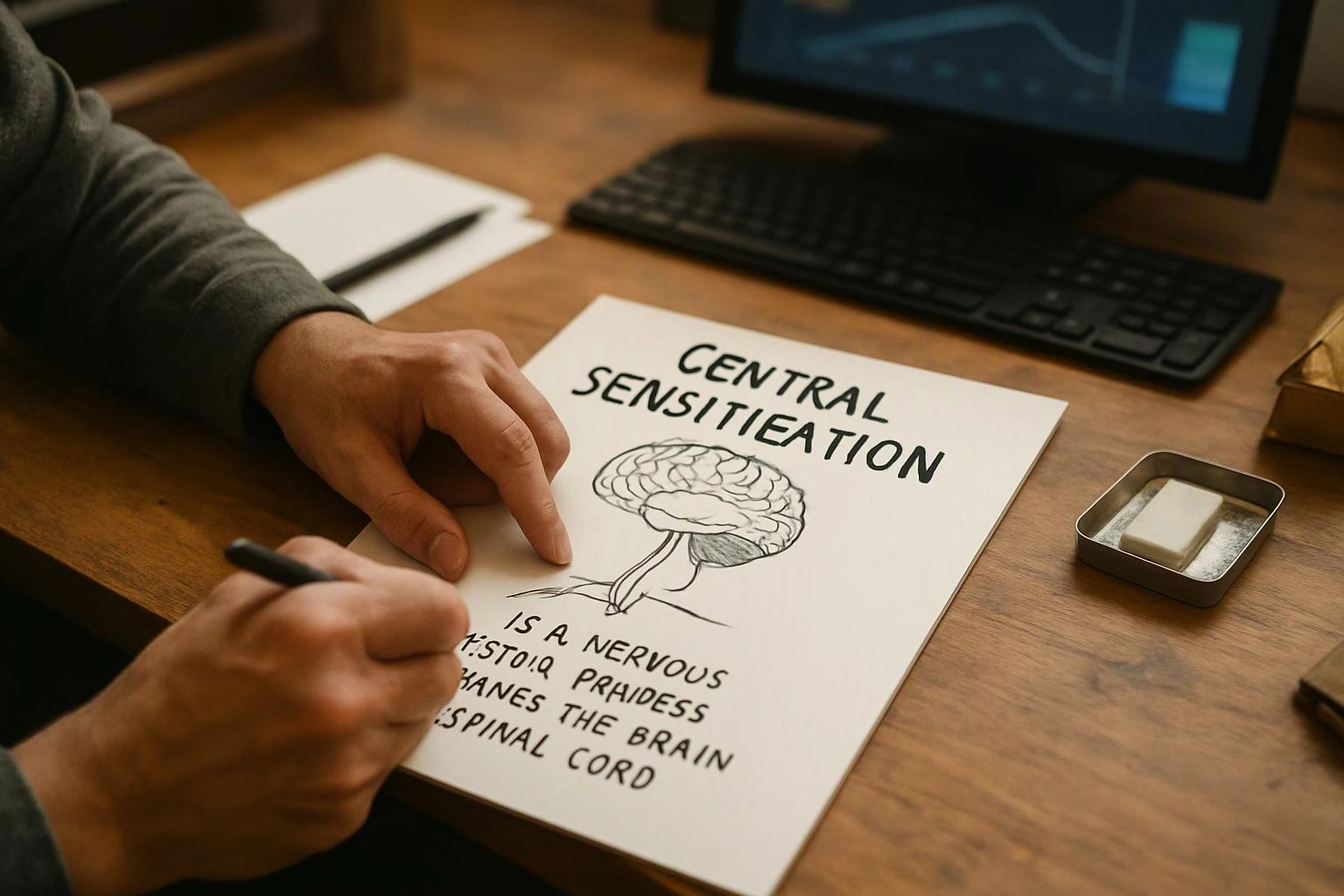
Central sensitization changes how the brain and spinal cord process signals from the body. Nerves may send stronger pain messages, and ordinary touch or pressure may feel painful. The nervous system can also stay alert after the original trigger becomes less active.
Related glossary terms: Allodynia, Chronic Pain, Neuropathic Pain.
Clinicians assess this pattern through the history and examination. They look at pain location, sensitivity to touch, sleep, fatigue, and how symptoms respond to activity. A scan may show a physical issue, but scan findings do not always explain the full pain experience.
Fibromyalgia often includes signs of central sensitization. Treatment planning may focus on the whole symptom pattern, not only one sore muscle or joint.

From the Premier Injury Specialists team
When we assess central sensitization, we review the pain pattern and the symptoms that occur with it. Our team considers tenderness, sleep concerns, fatigue, and daily function alongside examination findings. We use that broader view when discussing care for fibromyalgia and persistent widespread pain.
Central Sensitization in Practice: A Real-World Example
A person with fibromyalgia may feel pain across the back, arms, and legs, even when no new injury occurred. Light pressure from clothing or a gentle examination may also feel unusually painful.
Related Services
Related Terms
Allodynia
Allodynia is nerve-related pain caused by a touch or sensation that normally should not hurt. Light…
Chronic Pain
Chronic Pain is ongoing or recurring pain that continues after an injury should have healed or…
Neuropathic Pain
Neuropathic Pain is pain caused by damaged nerves or abnormal nerve signals. The pain may feel…
Widespread Pain
Widespread Pain is pain felt across several body areas, often on both sides of the body…
Premier Injury Specialists
Have Questions About Central Sensitization?
Contact Premier Injury Specialists for practical guidance on Central Sensitization and related pain management physician work in Stockbridge.