Could Your Low Back or Buttock Pain Be Coming From the SI Joint?
Sacroiliac joint pain can cause pain near the low back, buttock, hip, or upper thigh, especially with certain movements or positions. Premier Injury Specialists evaluates the symptom pattern, physical findings, and possible causes before discussing treatment.
Request an EstimateWhat Is Sacroiliac Joint Pain?
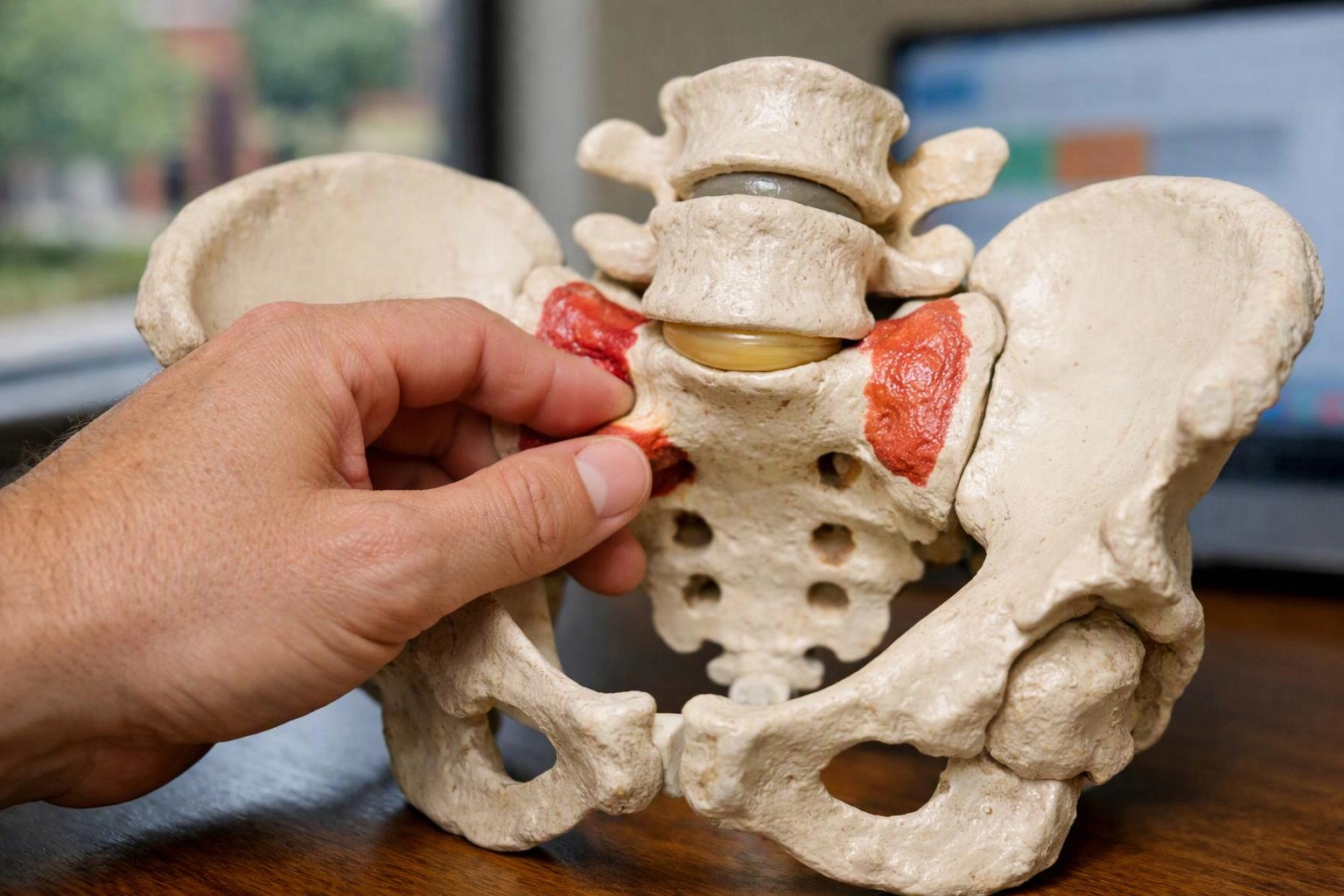
Sacroiliac joint pain is pain from the joints that connect the sacrum to the ilium on each side of the pelvis. These joints help link the spine and pelvis while supporting everyday movement.
The sacroiliac joint can become irritated after an injury or repeated strain. The result may feel like low back pain, pelvic pain, or pain near the back of the pelvis.
What Does SI Joint Pain Feel Like?
SI joint pain often feels like one-sided pain near the low back or buttock, and symptoms can extend into the hip or upper thigh.
Symptoms can change with body position and activity. We look at the full pattern because lumbar spine and hip problems can feel similar.
What Can Cause Sacroiliac Joint Pain?
Sacroiliac joint pain can develop when the joint, ligaments, or nearby tissues become stressed. We connect the symptom pattern with the person’s injury history and daily activities.
Common causes include the following:
How Can SI Joint Pain Radiate Into the Thigh?
Yes, SI joint pain can radiate into the buttock, hip, or upper thigh because irritated joint structures can refer pain beyond the joint itself.
Referred pain from the SI joint may feel different from nerve pain caused by the lumbar spine or sciatic nerve. Sciatica often follows a nerve path, while pain from the SI joint commonly centers near the buttock and back of the pelvis.
These patterns can overlap, so our team checks for both SI joint dysfunction and other possible causes.
How Is Sacroiliac Joint Pain Diagnosed?
Sacroiliac joint pain is diagnosed by reviewing symptoms, examining movement and tenderness, and checking for other causes of low back or buttock pain.
Our evaluation starts with a detailed medical history. We ask how the pain began, where it travels, and which movements change it.
During the physical examination, we assess pain location, joint tenderness, movement, strength, and nerve findings. We use this information to build a differential diagnosis that may include hip conditions, lumbar spine problems, and sciatica.
Imaging may help when the history or examination suggests another condition. Imaging alone does not always identify the SI joint as the pain source, so we interpret results with the rest of the evaluation.
How Can You Reduce the Risk of SI Joint Flare-Ups?
SI joint flare-ups may be reduced by limiting strain and supporting balanced movement. These steps don't replace an evaluation when pain persists or keeps returning.
Our team can help connect activity changes with the findings from your examination.
When Is an SI Joint Injection Considered?
An SI joint injection may be considered when examination findings point to the joint and pain continues despite appropriate nonsurgical care; our team reviews whether injection treatment fits the diagnosis.
A diagnostic injection can help test whether the SI joint contributes to the pain. A therapeutic injection may also be discussed when persistent pain limits activity after conservative treatment.
We use image guidance when an injection is appropriate. Our team reviews the expected purpose, possible risks, and other treatment choices before proceeding. You can learn more about the process on our sacroiliac joint injection service page.
When Should You Seek Medical Evaluation for SI Joint Symptoms?
Persistent or worsening SI joint symptoms deserve medical evaluation, especially when they affect walking, sleep, or daily activity.
Seek prompt care for leg weakness, new numbness, bowel or bladder changes, fever, or pain after significant trauma. These signs may point to a condition that needs attention beyond routine SI joint care.
We review urgent warning signs and arrange the right evaluation based on your symptoms. Early assessment can also help separate SI joint pain from nerve, spine, or hip conditions.
Questions About SI Joint Pain
Can SI joint pain feel like sciatica?
Yes, SI joint pain can feel like sciatica because both conditions may cause buttock or thigh symptoms. Premier Injury Specialists checks for nerve findings and other clues that help separate the conditions.
Can sitting make sacroiliac joint pain worse?
Yes, sitting can make sacroiliac joint pain worse for some people, especially when one position is held for too long. Pain may also increase when changing from sitting to standing.
Can an SI joint problem affect one side more than the other?
Yes, an SI joint problem can affect one side more than the other. One-sided low back pain or buttock pain is common, but the full symptom pattern still needs evaluation.
Can SI joint pain improve without an injection?
Yes, SI joint pain can improve without an injection when activity changes, movement care, and other conservative treatment address the cause. Our team discusses injection treatment only when the diagnosis and ongoing symptoms support it.
SI joint symptoms can overlap with lumbar spine, hip, and nerve conditions. Premier Injury Specialists can review your symptoms and discuss the next appropriate step.
Get a Free Estimate